

Ecommerce Challenges &
Trends in 2026

By James
December 25 2025
18 min to read

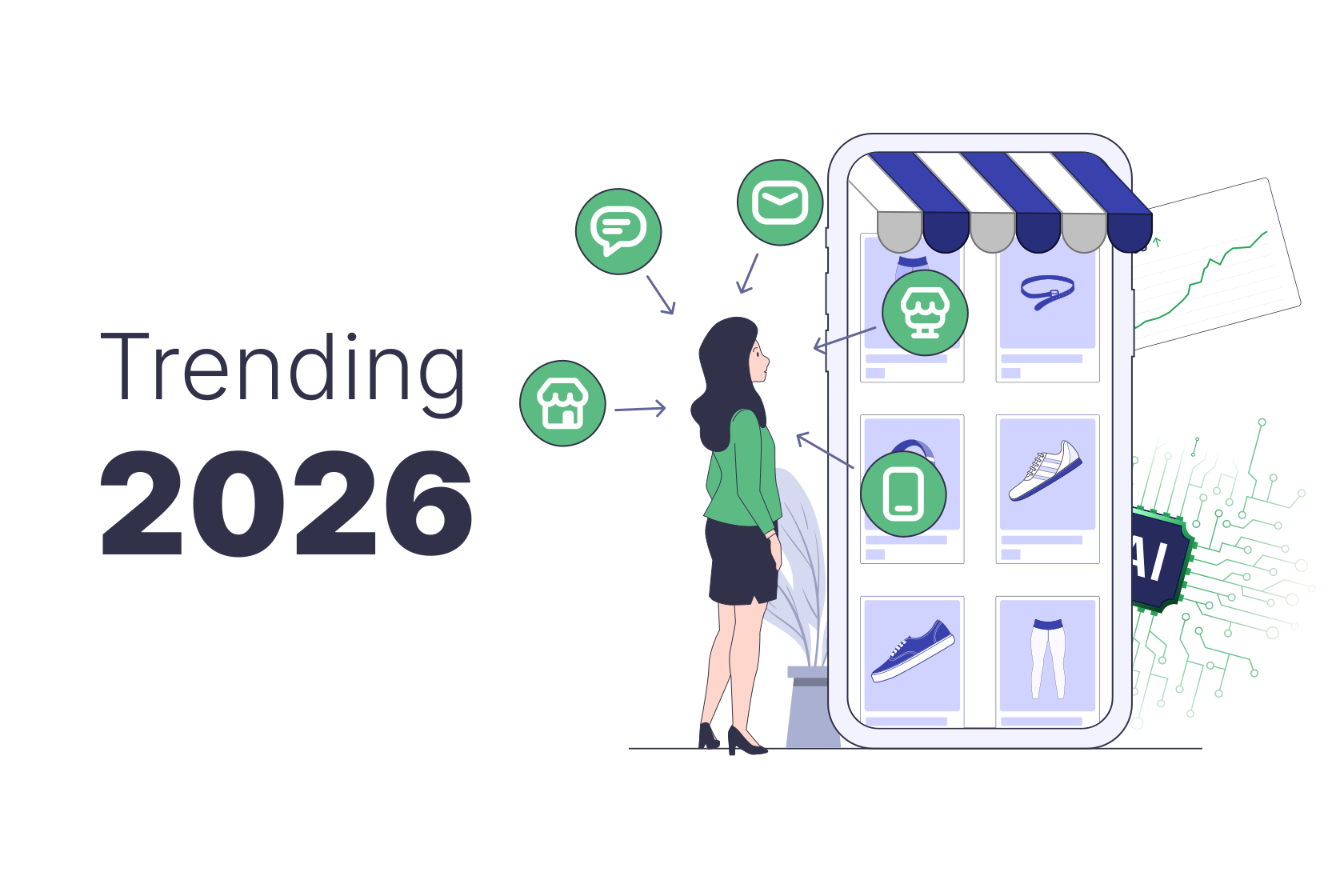
The year 2026 marks a pivotal moment in the future of eCommerce, driven by rapid technological innovation and evolving consumer expectations. From AI-powered shopping agents to immersive social and augmented reality experiences, businesses face both exciting opportunities and complex challenges.
Staying ahead requires spotting current eCommerce trends early and adopting strategies that turn innovation into eCommerce growth. But with the right tools and strategies, your brand can stay ahead and thrive.
Let’s explore the key eCommerce trends of 2026 and discover how to turn them into competitive advantages.
Staying ahead requires spotting current eCommerce trends early and adopting strategies that turn innovation into eCommerce growth. But with the right tools and strategies, your brand can stay ahead and thrive.
Let’s explore the key eCommerce trends of 2026 and discover how to turn them into competitive advantages.
Top Ecommerce Trends to Watch in 2026
As ecommerce continues to evolve, 2026 stands out as a year of major change. Below, we highlight the top trends in eCommerce every retailer should watch in 2026 to stay competitive and capture growth opportunities. These latest eCommerce trends reflect technological advances, shifting consumer behavior, and the evolving eCommerce landscape.
Agentic AI & Predictive Commerce
AI agents are increasingly guiding shoppers, anticipating their needs, and completing purchases autonomously. Predictive search and recommendation engines are enabling hyper-personalized experiences, reducing friction, and increasing conversion rates. These developments are among the eCommerce technology trends that will define the future of eCommerce.
Next-Gen Product Discovery & Personalization
Large language models (LLMs) are transforming search and recommendations, delivering highly relevant results instantly. Shoppers can discover products through conversational queries or predictive suggestions, moving toward “zero-click” commerce. This trend reflects broader eCommerce business trends in personalization and online shopping trends.
Social & Immersive Commerce
Social media and immersive technologies blur the line between content and commerce. Shoppable videos, virtual influencers, and AR try-on experiences drive engagement, reduce returns, and create interactive shopping journeys. These are some of the current trends in eCommerce that leverage emerging eCommerce insights.
Marketplace-First Commerce & Platform Diversification
More brands are prioritizing marketplaces as key sales and discovery channels. TikTok Shop, Temu, and vertical-specific marketplaces are becoming critical for reaching new audiences, complementing DTC channels, and scaling efficiently in 2026. This shift highlights online marketplace trends.
Unified Commerce & Real-Time Inventory Visibility
As shopping journeys span multiple touchpoints, consistency has become a baseline expectation. Real-time synchronization of inventory, customer data, and fulfillment enables retailers to improve accuracy, minimize stock shortages, and support flexible fulfillment options across online and offline channels.
Checkout & Payments Innovation
Frictionless payments continue to drive conversion. Digital wallets, next-generation BNPL solutions, and subscription-based ecosystems allow customers to pay how, when, and in what cadence they prefer, while increasing lifetime value and retention.
Sustainable & Circular Commerce
Sustainability has become a decisive factor in how consumers choose where to shop. Shoppers increasingly look for resale options, reusable packaging, and clear information about a brand’s environmental impact. Embracing circular commerce models helps reduce waste while building stronger customer loyalty and brand trust.
Key Ecommerce Challenges 2026
Now, let’s take a look at top challenges for online retailers in 2026, mainly rising customer expectations, increased competition, and the need for smarter decision-making through AI and automation. At the same time, current eCommerce trends like sustainability demands and tighter data privacy regulations are reshaping the way brands operate and engage with consumers.
Let’s explore these challenges with tools to improve eCommerce growth in 2026 along with eCommerce growth strategies.
Let’s explore these challenges with tools to improve eCommerce growth in 2026 along with eCommerce growth strategies.
Rising Customer Expectations
"61% of consumers require high-quality service just to consider a brand" (PWC).
Challenge
As technology advances, customer expectations continue to rise. The growing use of AI for personalized shopping experiences and the shift toward sustainable shipping options have set new standards for what consumers expect from online retailers. Today’s customers demand tailored experiences and faster delivery, easy returns, and transparent service. If a retailer fails to meet these heightened expectations, the customer will quickly look elsewhere. In fact, according to PWC, 61% of consumers require high-quality service just to consider a brand, emphasizing CX as a baseline for loyalty amid digital-first expectations from Gen Z and millennials.
Solution
To meet increasing customer expectations, online merchants need to deliver highly personalized shopping experiences using next-gen eCommerce technology trends. AI personalization in eCommerce allows customers to find what they need quickly and effortlessly based on their liking and past interactions with your store. The AI algorithm considers key factors like:
Combine this AI personalization in eCommerce with efficient checkout processes, fast delivery options, and personalized marketing campaigns that lead to search experience enhancement and user engagement improvement.
As technology advances, customer expectations continue to rise. The growing use of AI for personalized shopping experiences and the shift toward sustainable shipping options have set new standards for what consumers expect from online retailers. Today’s customers demand tailored experiences and faster delivery, easy returns, and transparent service. If a retailer fails to meet these heightened expectations, the customer will quickly look elsewhere. In fact, according to PWC, 61% of consumers require high-quality service just to consider a brand, emphasizing CX as a baseline for loyalty amid digital-first expectations from Gen Z and millennials.
Solution
To meet increasing customer expectations, online merchants need to deliver highly personalized shopping experiences using next-gen eCommerce technology trends. AI personalization in eCommerce allows customers to find what they need quickly and effortlessly based on their liking and past interactions with your store. The AI algorithm considers key factors like:
- Products viewed
- Products added to cart
- Products purchased
- Brand preferences (Shopify only)
Combine this AI personalization in eCommerce with efficient checkout processes, fast delivery options, and personalized marketing campaigns that lead to search experience enhancement and user engagement improvement.
Increased Competition and Saturation
"Roughly 419 new stores open every single day" (Pew Research Center).
Challenge
Stiff competition is one of the online retail challenges next year. In 2023, there were 2.4 million online stores globally, and by 2026, that number had risen to 2.8 million - an increase of 400,000 new stores in the United States alone. That’s roughly 547 new stores opening every single day. Even if half of these stores ultimately fail to break even and close, that’s still a massive wave of new competitors! This challenge reflects broader global eCommerce trends and the competitive nature of eCommerce industries.
Can you imagine the flood of new competitors entering every niche, including yours, every day? How long will it take before the competition becomes even stiffer? With such rapid growth, it’s harder than ever for businesses to stand out. The market is saturated across many product categories, and consumers now have more choices than ever before, which causes online shopping problems.
Solution
To successfully compete with other brands, online store owners may focus on niche targeting and differentiation.
Stiff competition is one of the online retail challenges next year. In 2023, there were 2.4 million online stores globally, and by 2026, that number had risen to 2.8 million - an increase of 400,000 new stores in the United States alone. That’s roughly 547 new stores opening every single day. Even if half of these stores ultimately fail to break even and close, that’s still a massive wave of new competitors! This challenge reflects broader global eCommerce trends and the competitive nature of eCommerce industries.
Can you imagine the flood of new competitors entering every niche, including yours, every day? How long will it take before the competition becomes even stiffer? With such rapid growth, it’s harder than ever for businesses to stand out. The market is saturated across many product categories, and consumers now have more choices than ever before, which causes online shopping problems.
Solution
To successfully compete with other brands, online store owners may focus on niche targeting and differentiation.
- Niche Targeting: Businesses are finding success by honing in on specific lifestyles, interests, or needs. By focusing on smaller niches, they’re delivering tailored products and services that build deeply loyal customer bases.
- Differentiation: Standing out in a crowded market means more than just great products - it’s about exceptional service and building an emotional connection through a strong brand identity. Show customers what makes you unique!
- Omnichannel: Bringing it all together, omnichannel marketing ensures your brand is everywhere your customers are, and a Shopify mobile app builder helps you deliver a seamless, personalized experience directly on their smartphones.
Focus on Retention Over Acquisition
"Increasing customer retention by just 5% can boost profits by 25% to 95%" (Bain & Company).
Challenge
Acquiring new customers has always been a priority for online businesses, but in 2026, retention will be more important than ever for the future of eCommerce. With rising customer acquisition costs, building loyalty with existing customers isn’t just cost-effective - it’s the key to long-term eCommerce success.
New customers are important, but true business growth comes from repeat buyers. Retained customers drive consistent revenue, deepen brand engagement, and often bring in referrals. According to Bain & Company, even a 5% increase in retention can boost profits by an impressive 25% to 95%.
Solution
To shift from acquisition to retention, businesses can implement strategies such as:
Acquiring new customers has always been a priority for online businesses, but in 2026, retention will be more important than ever for the future of eCommerce. With rising customer acquisition costs, building loyalty with existing customers isn’t just cost-effective - it’s the key to long-term eCommerce success.
New customers are important, but true business growth comes from repeat buyers. Retained customers drive consistent revenue, deepen brand engagement, and often bring in referrals. According to Bain & Company, even a 5% increase in retention can boost profits by an impressive 25% to 95%.
Solution
To shift from acquisition to retention, businesses can implement strategies such as:
- Loyalty Programs: Offer exclusive benefits like early access, discounts, or points to encourage repeat purchases and keep customers invested.
- Personalized Marketing: Utilize customer data to personalize product recommendations, offers, and messaging, making customers feel more connected to your brand.
- Post-Purchase Experience: Enhance loyalty by sending thank-you notes, offering helpful product tips, and simplifying returns, ensuring customers return for future purchases.
E-Book
Search.
Click. Convert!
Click. Convert!
How to engage customers at each step of their journey.
AI and Automation for Better Decision Making
"78-88% of organizations now use AI in at least one business function, with 23% scaling agentic AI and 82% using GenAI weekly" (McKinsey).
Challenge
AI in eCommerce 2026 as well as automation, will be essential to improving decision-making in eCommerce. With massive amounts of data available, businesses need intelligent tools to process and interpret this information quickly and accurately. Ecommerce technology trends now allow businesses to optimize inventory, marketing, and personalized recommendations in real time.
Automation is crucial for improving efficiency across operations. From simplifying marketing efforts to managing inventory, it reduces the strain on human resources and enhances overall workflow. In fact, marketing automation is the second most powerful digital marketing strategy, just behind content marketing (Statista). With an ROI of $5.44 for every dollar spent , it’s clear how valuable automation can be (Nucleus Research).
Solution
Merchants looking to make data-driven decisions with AI and automation should focus on these tools:
AI in eCommerce 2026 as well as automation, will be essential to improving decision-making in eCommerce. With massive amounts of data available, businesses need intelligent tools to process and interpret this information quickly and accurately. Ecommerce technology trends now allow businesses to optimize inventory, marketing, and personalized recommendations in real time.
Automation is crucial for improving efficiency across operations. From simplifying marketing efforts to managing inventory, it reduces the strain on human resources and enhances overall workflow. In fact, marketing automation is the second most powerful digital marketing strategy, just behind content marketing (Statista). With an ROI of $5.44 for every dollar spent , it’s clear how valuable automation can be (Nucleus Research).
Solution
Merchants looking to make data-driven decisions with AI and automation should focus on these tools:
- AI Analytics: Leveraging AI to analyze customer buying and behavioral data in eCommerce helps businesses fine-tune everything from pricing to product recommendations. Additionally, it enables better demand forecasting, ensuring businesses stay ahead of stock shortages or surpluses.
- Automated Marketing: Automation allows stores to scale personalized customer journey optimization effortlessly. AI-powered ads and automated email campaigns ensure the right messages reach the right people at just the right time, boosting conversions and re-engaging customers.
Sustainability Demands
"72% of consumers are willing to adjust their purchasing habits to reduce their environmental impact" (Consumers International).
Challenge
Sustainability is now a major factor in online shopping trends, shaping customer expectations across eCommerce industries. 72% of consumers are willing to adjust their purchasing habits to reduce their environmental impact, making sustainability in eCommerce a key factor in their decision-making process (Consumers International).
Solution
One of the strategies for sustainable eCommerce growth is implementing green policies. From using sustainable materials to adopting carbon-neutral shipping options, there are numerous ways to reduce environmental impact. By prioritizing sustainability, you can build customer loyalty and position your brand as a leader in the eco-conscious market. However, it’s important to remember that as more businesses shift towards green policies, the competition in this space will only intensify.
An excellent tool to support your green policies is adding search filtering and sorting to promote sustainable items. By adding custom filters like eco-friendly options, you allow customers to easily search for products that align with their sustainability values, helping them make more environmentally conscious purchasing decisions.
Sustainability is now a major factor in online shopping trends, shaping customer expectations across eCommerce industries. 72% of consumers are willing to adjust their purchasing habits to reduce their environmental impact, making sustainability in eCommerce a key factor in their decision-making process (Consumers International).
Solution
One of the strategies for sustainable eCommerce growth is implementing green policies. From using sustainable materials to adopting carbon-neutral shipping options, there are numerous ways to reduce environmental impact. By prioritizing sustainability, you can build customer loyalty and position your brand as a leader in the eco-conscious market. However, it’s important to remember that as more businesses shift towards green policies, the competition in this space will only intensify.
An excellent tool to support your green policies is adding search filtering and sorting to promote sustainable items. By adding custom filters like eco-friendly options, you allow customers to easily search for products that align with their sustainability values, helping them make more environmentally conscious purchasing decisions.
Privacy and Data Security Regulations
"81% of consumers will not purchase from a company they don’t trust" (PWC).
Challenge
When we think of security challenges in eCommerce, fraud and scams often come to mind—but the risks go much deeper. What if you failed to meet data protection regulations or, worse, lost sensitive customer information? The impact could be severe - leading to all sorts of online shopping problems like operational disruptions, tarnished reputation, and a loss of consumer trust, reflecting trends in eCommerce security priorities. In fact, 81% of shoppers won’t make a purchase from a brand they don’t trust, and 73% are unlikely to recommend a site if its security is seen as lacking (PWC).
Solution
How to overcome eCommerce challenges in 2026 regarding data security is an important question worth exploring. To mitigate these risks, it's crucial to comply with global data protection laws like the ever-evolving GDPR. Adopting compliant data collection tools and prioritizing transparency in how you collect and use customer data are key steps in protecting your business. Offering clear opt-in options, outlining data usage policies, and giving customers control over the information they share helps maintain compliance and fosters a sense of security, strengthening customer trust. Also, consider displaying GDPR-compliant badges in your store to give extra confidence to your customers.
When we think of security challenges in eCommerce, fraud and scams often come to mind—but the risks go much deeper. What if you failed to meet data protection regulations or, worse, lost sensitive customer information? The impact could be severe - leading to all sorts of online shopping problems like operational disruptions, tarnished reputation, and a loss of consumer trust, reflecting trends in eCommerce security priorities. In fact, 81% of shoppers won’t make a purchase from a brand they don’t trust, and 73% are unlikely to recommend a site if its security is seen as lacking (PWC).
Solution
How to overcome eCommerce challenges in 2026 regarding data security is an important question worth exploring. To mitigate these risks, it's crucial to comply with global data protection laws like the ever-evolving GDPR. Adopting compliant data collection tools and prioritizing transparency in how you collect and use customer data are key steps in protecting your business. Offering clear opt-in options, outlining data usage policies, and giving customers control over the information they share helps maintain compliance and fosters a sense of security, strengthening customer trust. Also, consider displaying GDPR-compliant badges in your store to give extra confidence to your customers.
AI-Powered Fraud and Cybersecurity Concerns
"61% of consumers would stop using a brand after a major data breach" (Sqmagazine).
Challenge
Trends in eCommerce industry show that as eCommerce adoption grows, so do threats from AI-powered fraud, bots, and sophisticated cyberattacks. Fraudsters now use automation and AI to mimic human behavior, bypass security measures, and exploit vulnerabilities in online stores.
The impact of a breach extends far beyond technical damage. Research from Sqmagazine reveals that 61% of consumers would abandon a brand following a major data breach, and 35% would actively respond by closing accounts or moving to competitors, underscoring the long-term reputational risks (Sqmagazine).
Solution
To mitigate AI-driven threats, eCommerce businesses must adopt advanced security measures, including:
Investing in cybersecurity not only safeguards revenue but also reinforces trust, giving customers confidence to shop without hesitation.
Trends in eCommerce industry show that as eCommerce adoption grows, so do threats from AI-powered fraud, bots, and sophisticated cyberattacks. Fraudsters now use automation and AI to mimic human behavior, bypass security measures, and exploit vulnerabilities in online stores.
The impact of a breach extends far beyond technical damage. Research from Sqmagazine reveals that 61% of consumers would abandon a brand following a major data breach, and 35% would actively respond by closing accounts or moving to competitors, underscoring the long-term reputational risks (Sqmagazine).
Solution
To mitigate AI-driven threats, eCommerce businesses must adopt advanced security measures, including:
- AI-based fraud detection that flags unusual purchase patterns or suspicious bot activity in real time.
- Multi-layered authentication such as 2FA and biometric verification for high-risk actions.
- Regular penetration testing and software updates to patch vulnerabilities before they are exploited.
- Monitoring bot traffic to identify automated attacks that mimic genuine users, protecting inventory and checkout processes.
Investing in cybersecurity not only safeguards revenue but also reinforces trust, giving customers confidence to shop without hesitation.
Shift to AI Shopping Agents
"47% already using AI for shopping tasks like comparisons" (Morningstar).
Challenge
The recent trends in eCommerce show that AI is rapidly transforming how consumers shop. According to Morningstar, 47% of shoppers already use AI for tasks like product comparisons. From generative chatbots to voice assistants such as Alexa, Google Assistant, and Siri, AI is increasingly guiding purchasing decisions.
Research from Visa anticipates that millions of U.S. consumers will rely on AI agents to make purchases by the 2026 holiday season. For ecommerce platforms, this represents a new challenge: if products and content aren’t optimized for AI interactions, brands risk losing sales to these automated channels.
Solution
Brands must adapt their digital storefronts for AI-driven commerce:
By preparing for AI-driven purchasing behavior, retailers can capture sales from new channels, improve customer convenience, and maintain a competitive edge.
The recent trends in eCommerce show that AI is rapidly transforming how consumers shop. According to Morningstar, 47% of shoppers already use AI for tasks like product comparisons. From generative chatbots to voice assistants such as Alexa, Google Assistant, and Siri, AI is increasingly guiding purchasing decisions.
Research from Visa anticipates that millions of U.S. consumers will rely on AI agents to make purchases by the 2026 holiday season. For ecommerce platforms, this represents a new challenge: if products and content aren’t optimized for AI interactions, brands risk losing sales to these automated channels.
Solution
Brands must adapt their digital storefronts for AI-driven commerce:
- Structured product data: Ensure product descriptions, pricing, availability, and reviews are machine-readable to enable accurate AI recommendations.
- Conversational content optimization: Optimize product information for natural-language queries.
- Integration with AI commerce platforms: Consider partnerships with voice assistants or AI shopping ecosystems.
- AI personalization: Use your first-party data to provide tailored recommendations that AI assistants can surface to customers.
By preparing for AI-driven purchasing behavior, retailers can capture sales from new channels, improve customer convenience, and maintain a competitive edge.
A veteran in sustainable business shared valuable insights on search challanges.
Adapting to Ecommerce Trends in 2026
Now, understanding current eCommerce trends and implementing actionable solutions is essential for driving eCommerce growth and ensuring long-term success in the eCommerce industry. You’ll learn everything you need to know about each trend with real-life examples.
#1 Strengthen Product Discovery & Personalization
Personalization remains a cornerstone of successful eCommerce business trends. Today’s shoppers expect to find the right product instantly, with minimal effort. If they can’t quickly discover what they’re looking for, they won’t hesitate to leave and shop elsewhere.
As product catalogs grow and customer attention spans shrink, generic search results and one-size-fits-all recommendations simply don’t work anymore. Modern eCommerce brands must deliver intent-driven discovery experiences that adapt in real time to each shopper’s behavior, preferences, and needs. When done right, personalized discovery not only improves conversions but also builds long-term loyalty.
Stats
Example
While Netflix isn’t an eCommerce platform, it sets the gold standard for personalized discovery at scale. Instead of presenting the same catalog to every user, Netflix dynamically adapts what each viewer sees from recommended titles and categories to personalized thumbnails based on viewing history, preferences, and real-time behavior.
The result is a seamless experience where users rarely need to actively search; relevant content appears automatically. Ecommerce brands can take inspiration from this approach by personalizing product search results, category pages, and recommendations, guiding shoppers to the most relevant products from the moment they arrive. This demonstrates how predictive, AI-driven product discovery is becoming central to online shopping trends.
As product catalogs grow and customer attention spans shrink, generic search results and one-size-fits-all recommendations simply don’t work anymore. Modern eCommerce brands must deliver intent-driven discovery experiences that adapt in real time to each shopper’s behavior, preferences, and needs. When done right, personalized discovery not only improves conversions but also builds long-term loyalty.
Stats
- Site search visitors convert up to 2–3x more than non-search users, making search one of the highest-intent touchpoints in eCommerce (Nosto).
- 73% of consumers expect brands to understand their unique needs and preferences, and are more likely to purchase from retailers that deliver personalized experiences (SalesForce)
Example
While Netflix isn’t an eCommerce platform, it sets the gold standard for personalized discovery at scale. Instead of presenting the same catalog to every user, Netflix dynamically adapts what each viewer sees from recommended titles and categories to personalized thumbnails based on viewing history, preferences, and real-time behavior.
The result is a seamless experience where users rarely need to actively search; relevant content appears automatically. Ecommerce brands can take inspiration from this approach by personalizing product search results, category pages, and recommendations, guiding shoppers to the most relevant products from the moment they arrive. This demonstrates how predictive, AI-driven product discovery is becoming central to online shopping trends.

Netflix has perfected the art of personalization.
Tips for Adopting Product Discovery & Personalization in eCommerce
Start by improving your on-site search and filtering experience so customers can easily refine results based on their preferences. Use behavioral data, such as products viewed, searched for, or purchased, to personalize search results and recommendations in real time. Focus on high-impact areas like search bars, category pages, and product listings, and ensure the experience is fast and mobile-friendly. Even small personalization improvements can significantly enhance engagement, conversions, and customer satisfaction.
Start by improving your on-site search and filtering experience so customers can easily refine results based on their preferences. Use behavioral data, such as products viewed, searched for, or purchased, to personalize search results and recommendations in real time. Focus on high-impact areas like search bars, category pages, and product listings, and ensure the experience is fast and mobile-friendly. Even small personalization improvements can significantly enhance engagement, conversions, and customer satisfaction.


#2 Build a First-Party Data Strategy
In 2026, trends in eСommerce emphasize the critical role of first-party data as privacy rules continue to evolve. Companies can no longer depend on external data providers; understanding customers now requires collecting insights directly from owned channels.
Leveraging first-party data helps businesses build trust while offering highly personalized experiences. By analyzing interactions such as search queries, purchase patterns, and stated preferences, brands can make more informed decisions, optimize personalization, and strengthen retention strategies. A weak first-party data strategy risks falling behind in a privacy-focused digital marketplace.
Stats
Example
Nike demonstrates the potential of first-party data to create meaningful engagement. Its network of apps and digital touchpoints captures consent-based insights, including browsing behavior, purchase patterns, and customer preferences. These insights are then used to deliver personalized product suggestions, relevant content, and exclusive promotions.
By giving customers value in exchange, such as early access to drops, tailored training advice, and exclusive member benefits, Nike has built a strong first-party data engine that boosts loyalty while maintaining privacy standards.
Leveraging first-party data helps businesses build trust while offering highly personalized experiences. By analyzing interactions such as search queries, purchase patterns, and stated preferences, brands can make more informed decisions, optimize personalization, and strengthen retention strategies. A weak first-party data strategy risks falling behind in a privacy-focused digital marketplace.
Stats
- 71% would stop business if sensitive data is mishandled without permission. Up to 72% cease buying due to privacy concerns, and 60% spend more with trusted data handlers (Termly).
- Brands using first-party data see up to 68% increases in CLV through better retention strategies (BlueCore).
Example
Nike demonstrates the potential of first-party data to create meaningful engagement. Its network of apps and digital touchpoints captures consent-based insights, including browsing behavior, purchase patterns, and customer preferences. These insights are then used to deliver personalized product suggestions, relevant content, and exclusive promotions.
By giving customers value in exchange, such as early access to drops, tailored training advice, and exclusive member benefits, Nike has built a strong first-party data engine that boosts loyalty while maintaining privacy standards.

NikePlus membership program offered exclusive benefits and rewards to members in exchange for data.
Tips for Building a First-Party Data Strategy in eCommerce
Start by identifying the data you can collect directly through your website, such as search behavior, product interactions, purchase history, and customer preferences. Be transparent about how this data is used and give customers clear control over their information. Focus on collecting high-quality, consent-based data rather than large volumes of unnecessary information. Finally, activate this data across your store by using it to personalize discovery, marketing, and post-purchase experiences, ensuring customers clearly see the value of sharing their data.
Start by identifying the data you can collect directly through your website, such as search behavior, product interactions, purchase history, and customer preferences. Be transparent about how this data is used and give customers clear control over their information. Focus on collecting high-quality, consent-based data rather than large volumes of unnecessary information. Finally, activate this data across your store by using it to personalize discovery, marketing, and post-purchase experiences, ensuring customers clearly see the value of sharing their data.
#3 Improve Post-Purchase Experience & Retention
In 2026, the most successful ecommerce brands are those that focus on keeping customers coming back. With customer acquisition becoming more expensive, improving the post-purchase experience is now one of the most efficient ways to grow customer lifetime value and support current ecommerce trends.
Post-purchase isn’t just about confirming an order or tracking delivery. It’s a critical moment to build confidence, deepen trust, and inspire repeat purchases. By offering personalized follow-ups, loyalty rewards, easy returns, and proactive updates, brands can turn first-time buyers into loyal, repeat customers.
Stats
Example
Allbirds, a sustainable footwear and apparel brand, consistently prioritizes customer support throughout the post‑purchase journey. Rather than just sending a generic order confirmation, Allbirds highlights multiple support channels in every communication, making it easy for customers to get help if they need it. This approach reinforces customer confidence and strengthens loyalty by showing shoppers the brand is there for them after purchase, not just up to checkout.
Post-purchase isn’t just about confirming an order or tracking delivery. It’s a critical moment to build confidence, deepen trust, and inspire repeat purchases. By offering personalized follow-ups, loyalty rewards, easy returns, and proactive updates, brands can turn first-time buyers into loyal, repeat customers.
Stats
- Small improvements in retention can yield big results. A mere 5% increase in keeping customers can boost profits between 25% and 95% (Bain & Company).
- Meanwhile, repeat shoppers make up nearly 46% of orders and a substantial portion of revenue (Shopify).
Example
Allbirds, a sustainable footwear and apparel brand, consistently prioritizes customer support throughout the post‑purchase journey. Rather than just sending a generic order confirmation, Allbirds highlights multiple support channels in every communication, making it easy for customers to get help if they need it. This approach reinforces customer confidence and strengthens loyalty by showing shoppers the brand is there for them after purchase, not just up to checkout.

Allbirds sends post purchase emails, encouraging customers to come back and spend more.
Tips for Improving Post-Purchase Experience & Retention in eCommerce
Start by making communication clear and proactive, keep customers informed about order status, delivery timelines, and any potential issues. Simplify returns and refunds to remove friction and build confidence in future purchases. Use post-purchase emails and on-site messaging to provide helpful product tips, request reviews, and recommend relevant products. Finally, consider loyalty programs or exclusive perks that reward repeat customers and reinforce long-term engagement.
Start by making communication clear and proactive, keep customers informed about order status, delivery timelines, and any potential issues. Simplify returns and refunds to remove friction and build confidence in future purchases. Use post-purchase emails and on-site messaging to provide helpful product tips, request reviews, and recommend relevant products. Finally, consider loyalty programs or exclusive perks that reward repeat customers and reinforce long-term engagement.
#4 Modernize Tech Stack with Composable Tools
In 2026, agility is key to adapting to current ecommerce trends. Monolithic platforms can’t keep pace with evolving customer expectations, new sales channels, or AI-driven personalization needs. Modern eCommerce brands are moving toward composable, API-first tech stacks, which allow them to swap, upgrade, or integrate best-of-breed tools without replatforming.
Composable commerce empowers retailers to tailor their technology infrastructure to specific business goals, rapidly adapt to market changes, and scale efficiently. By adopting a modular approach, brands can seamlessly integrate advanced search, personalized recommendations, marketing automation, and analytics into a unified system, all while avoiding vendor lock-in.
Stats
Example
Stitch Fix, a personalized online apparel retailer, leverages a modular tech stack to deliver highly curated shopping experiences. Instead of relying on a single platform for everything, Stitch Fix integrates multiple systems for real-time inventory and personalization, demonstrating how eCommerce insights and modular tools optimize operations. This modular approach allows them to experiment with new features, personalize customer experiences more effectively, and scale operations without overhauling the entire system.
The result is a flexible, adaptive infrastructure that supports rapid innovation and meets customer expectations for personalization and convenience.
Composable commerce empowers retailers to tailor their technology infrastructure to specific business goals, rapidly adapt to market changes, and scale efficiently. By adopting a modular approach, brands can seamlessly integrate advanced search, personalized recommendations, marketing automation, and analytics into a unified system, all while avoiding vendor lock-in.
Stats
- 80% of eCommerce enterprise companies have considered or already adopted composable architecture by 2024, with 42% currently implementing it—making it a mainstream strategy for agility and avoiding vendor lock-in. (HubSpot)
- 44% of organizations are expanding MACH (composable) adoption in 2025, up from earlier years, enabling 37% faster time-to-market for features like AI personalization and omnichannel integration (Dinarys).
Example
Stitch Fix, a personalized online apparel retailer, leverages a modular tech stack to deliver highly curated shopping experiences. Instead of relying on a single platform for everything, Stitch Fix integrates multiple systems for real-time inventory and personalization, demonstrating how eCommerce insights and modular tools optimize operations. This modular approach allows them to experiment with new features, personalize customer experiences more effectively, and scale operations without overhauling the entire system.
The result is a flexible, adaptive infrastructure that supports rapid innovation and meets customer expectations for personalization and convenience.

A representation of a complex system in Stitch Fix.
Tips for Modernizing Your Tech Stack
Start by assessing which parts of your current stack limit speed, personalization, or scalability. Identify modular solutions, such as headless search, AI recommendation engines, or API-based inventory systems, that can integrate with your existing infrastructure. Prioritize tools that are flexible, cloud-based, and easy to swap as business needs evolve. Finally, adopt an iterative approach: implement one or two composable components at a time, measure impact, and expand gradually to build a truly agile eCommerce ecosystem.
Start by assessing which parts of your current stack limit speed, personalization, or scalability. Identify modular solutions, such as headless search, AI recommendation engines, or API-based inventory systems, that can integrate with your existing infrastructure. Prioritize tools that are flexible, cloud-based, and easy to swap as business needs evolve. Finally, adopt an iterative approach: implement one or two composable components at a time, measure impact, and expand gradually to build a truly agile eCommerce ecosystem.
#5 Omnichannel Shopping Experiences
One of the digital retail trends 2026 will be the seamless blend of online and offline shopping experiences. Omnichannel retail is all about providing a smooth, consistent experience for customers no matter where they’re shopping - whether it’s on your website, browsing on social media, or making a purchase in-store. More retailers are investing in connecting with customers across different touchpoints to foster stronger relationships. In fact, 63% of stores are ramping up their social selling efforts because it’s proving to be highly profitable (McKinsey). Omnichannel allows customers to connect with your brand whenever and wherever they like, offering a unified shopping experience.
Stats
Example
Starbucks is a standout example of omnichannel customer engagement. Their mobile app lets customers order ahead, earn loyalty rewards, and redeem discounts both online and in-store. Beyond that, the app also offers features like drink customization, store hours, and exclusive promotions, making it super convenient for customers to interact with the brand, whether digitally or in person. This smooth integration keeps customers satisfied and loyal.
Stats
- Ecommerce drives 34% of B2B revenue, outpacing physical channels for high-value sales.(McKinsey).
- Retailers skipping omnichannel risk 33% lower revenue versus integrated peers (Emarsys 2025).
Example
Starbucks is a standout example of omnichannel customer engagement. Their mobile app lets customers order ahead, earn loyalty rewards, and redeem discounts both online and in-store. Beyond that, the app also offers features like drink customization, store hours, and exclusive promotions, making it super convenient for customers to interact with the brand, whether digitally or in person. This smooth integration keeps customers satisfied and loyal.

Starbucks is the epitome of omnichannel.
Tips for Adopting Omnichannel in eCommerce
To make omnichannel shopping truly seamless, you’ve got to pull all your customer data together. Think syncing up your online sales, in-store systems, CRM, and marketing tools so you can easily access things like purchase history and preferences. Once you’ve got that, offering personalized recommendations and making sure your messaging is consistent everywhere, whether online, in-store, or on social media - creates a smooth experience that keeps customers loyal and boosts your sales.
To make omnichannel shopping truly seamless, you’ve got to pull all your customer data together. Think syncing up your online sales, in-store systems, CRM, and marketing tools so you can easily access things like purchase history and preferences. Once you’ve got that, offering personalized recommendations and making sure your messaging is consistent everywhere, whether online, in-store, or on social media - creates a smooth experience that keeps customers loyal and boosts your sales.
In Conclusion
To stay competitive in the fast-evolving eCommerce landscape of 2026, businesses must embrace innovation, agility, and customer-centric strategies. A well-rounded approach that combines personalization, efficiency, and seamless experiences is essential for standing out in a crowded market. Tools like Searchanise Search & Filter empower brands to deliver highly personalized shopping experience, simplify the buyer journey, and drive meaningful engagement and conversions.
Personalized shopping is a baseline expectation that can differentiate your brand, foster loyalty, and turn one-time buyers into repeat customers. Leveraging advanced technology not only meets customer expectations but also saves time and resources, allowing your team to focus on growth, innovation, and creating memorable experiences.
The future of eCommerce belongs to businesses that are proactive, adaptable, and deeply attuned to their customers’ needs. Take action today to build a store that your customers don’t just visit — one they return to, again and again.
Personalized shopping is a baseline expectation that can differentiate your brand, foster loyalty, and turn one-time buyers into repeat customers. Leveraging advanced technology not only meets customer expectations but also saves time and resources, allowing your team to focus on growth, innovation, and creating memorable experiences.
The future of eCommerce belongs to businesses that are proactive, adaptable, and deeply attuned to their customers’ needs. Take action today to build a store that your customers don’t just visit — one they return to, again and again.
James
James is a dedicated writer with a deep passion for business growth, eCommerce, and the latest innovations in technology. With a keen eye for emerging trends, he focuses on creating content that helps businesses navigate and thrive in the digital landscape. When he's not writing insightful articles, James enjoys delving into the world of AI tools.








Pick your platform and smooth out your customers' journey
Easy install, ready right out of the box



Questions left?
We'll be happy to answer them!
We'll be happy to answer them!
Let's stay in touch!
Subscribe to our newsletters to learn more about Searchanise lifehacks, useful articles, and latests news.
We care about the protection of your data. Read our Privacy policy