

Jewelry Search in eCommerce: Smart Features, Real Cases, Proven Results

By James
November 28 2025
16 min to read

Jewelry shopping is an emotional experience, deeply rooted in love, memory, and personal identity. Customers want to feel that spark when they see something beautiful, but online, it must also deliver speed, accuracy, and trustworthy results. Every search query, every autocomplete suggestion, and every search interaction directly affects conversions.
This guide walks you through the new landscape of jewelry site search — including search jewelry by picture and jewelry serial number search — and shows how to turn these capabilities into a smooth, confidence-building shopping journey.
This guide walks you through the new landscape of jewelry site search — including search jewelry by picture and jewelry serial number search — and shows how to turn these capabilities into a smooth, confidence-building shopping journey.
How Jewelry Site Search Works
How Jewelry Site Search Works
Jewelry search is unlike typical retail search. Customers might search for jewelry using not only keywords like “rose gold band with square diamond,” but also jewelry image uploads such as “Taylor Swift earrings,” or even a hallmark on the inside of a ring.
That’s why modern jewelry search functionality blends AI, natural-language understanding, and reverse image search jewelry identification to interpret intent, context, and emotion — not just words. Leading retailers — from boutique fine-jewelry designers to enterprise brands — already combine semantic analysis and ID-based verification to power better discovery.
That’s why modern jewelry search functionality blends AI, natural-language understanding, and reverse image search jewelry identification to interpret intent, context, and emotion — not just words. Leading retailers — from boutique fine-jewelry designers to enterprise brands — already combine semantic analysis and ID-based verification to power better discovery.
Faster Discovery for Complex Jewelry Catalogs
Jewelry catalogs are often massive, detailed, and full of near-identical items. Customers might search for “white gold ring with emerald cut,” only to face hundreds of results. Smart jewelry search technology streamlines that process.
AI-powered search engines use semantic understanding and dynamic faceting to instantly narrow results based on shape, metal, carat, and style — without overwhelming the shopper.
Studies consistently show that shoppers rank strong on-site search among the most critical elements of the buying experience — and the overwhelming majority say their favorite retailers are the ones where they can find products instantly (Google). For jewelry stores with thousands of SKUs and gemstone variations, that clarity is priceless.
Faster discovery means fewer clicks, less friction, and more conversions.
AI-powered search engines use semantic understanding and dynamic faceting to instantly narrow results based on shape, metal, carat, and style — without overwhelming the shopper.
Studies consistently show that shoppers rank strong on-site search among the most critical elements of the buying experience — and the overwhelming majority say their favorite retailers are the ones where they can find products instantly (Google). For jewelry stores with thousands of SKUs and gemstone variations, that clarity is priceless.
Faster discovery means fewer clicks, less friction, and more conversions.
Reducing Choice Overload and Abandoned Carts
Too much choice can kill conversions. When faced with hundreds of similar items, customers freeze or abandon their carts entirely — a phenomenon known as decision fatigue.
But the solution isn’t to hide variants. It’s to organize them intelligently.
Showing variants as separate products can be an advantage, but only when supported by a smart jewelry search that keeps the experience orderly, relevant, and personalized.
Here’s how smart search turns complexity into clarity:
Research across retail UX shows a clear pattern: when search consistently returns relevant results and avoids zero-result frustration, cart abandonment drops by around 20–30% (Threekit). Shoppers stay engaged, make decisions faster, and experience far less overwhelm.
But when they’re shown a curated set of high-relevance options, they move faster, feel more confident, and complete their purchase instead of hesitating.
But the solution isn’t to hide variants. It’s to organize them intelligently.
Showing variants as separate products can be an advantage, but only when supported by a smart jewelry search that keeps the experience orderly, relevant, and personalized.
Here’s how smart search turns complexity into clarity:
- Prioritizes the most relevant variants first
- Prevents “variant flooding” in results
- Groups related items logically even if displayed separately
- Filters out options that don’t match intent (budget, metal, gemstone, style)
- Reduces zero-result searches, which are a major cause of abandonment
Research across retail UX shows a clear pattern: when search consistently returns relevant results and avoids zero-result frustration, cart abandonment drops by around 20–30% (Threekit). Shoppers stay engaged, make decisions faster, and experience far less overwhelm.
But when they’re shown a curated set of high-relevance options, they move faster, feel more confident, and complete their purchase instead of hesitating.
Boosting Conversion Rates and Average Order Value
Smart search isn’t just about UX — it’s one of the strongest revenue drivers in jewelry eCommerce.
When search understands what a shopper wants — and what they’re likely to want next — it becomes a direct driver of conversions and higher AOV. A person entering “diamond engagement ring” isn’t exploring at random; they’re signaling a high-intent purchase moment.
A smart jewelry search engine responds by surfacing matching wedding bands, complementary earrings, cleaning kits, or gift packaging right inside the search suggestions.
And at this moment, the Instant Search widget becomes a sales engine. Shoppers can use the “Add to Cart” button directly inside the Instant Search dropdown, letting them add products the moment they appear — without ever leaving the suggestion panel. This reduces friction, maintains shopping momentum, and is especially powerful on mobile, where every extra tap risks losing the customer.
Industry research shows that cross-selling can raise average order value by 10 – 30%, and AI-driven recommendation engines have achieved gains of up to 37 % in some retail case studies (Alloymarketing).
In other words: every query becomes an opportunity — not just to inform, but to convert.
When search understands what a shopper wants — and what they’re likely to want next — it becomes a direct driver of conversions and higher AOV. A person entering “diamond engagement ring” isn’t exploring at random; they’re signaling a high-intent purchase moment.
A smart jewelry search engine responds by surfacing matching wedding bands, complementary earrings, cleaning kits, or gift packaging right inside the search suggestions.
And at this moment, the Instant Search widget becomes a sales engine. Shoppers can use the “Add to Cart” button directly inside the Instant Search dropdown, letting them add products the moment they appear — without ever leaving the suggestion panel. This reduces friction, maintains shopping momentum, and is especially powerful on mobile, where every extra tap risks losing the customer.
Industry research shows that cross-selling can raise average order value by 10 – 30%, and AI-driven recommendation engines have achieved gains of up to 37 % in some retail case studies (Alloymarketing).
In other words: every query becomes an opportunity — not just to inform, but to convert.
Building Trust with Authentication & Certification
Trust is the foundation of jewelry eCommerce. Customers need proof that the piece they’re viewing is genuine, conflict-free, and accurately described.
Smart search integrates jewelry serial number search, jewelry hallmark search, and verification badges directly into results. A search for “GIA-certified diamond” instantly reveals certified products with verifiable IDs.
A shopper typing “GIA-certified diamond” can see products instantly labeled with certificate numbers and links to verification pages. Or having certificate filters will help them find what they are looking for faster. This reduces uncertainty and reinforces transparency.
Recent consumer surveys show that around 67% of jewelry buyers expect transparent sourcing and certification from brands, and some 79% say brand authenticity influences their purchasing decision (WiFiTalents). Embedding trust signals in search isn’t just a UX improvement — it’s a sales multiplier.
Smart search integrates jewelry serial number search, jewelry hallmark search, and verification badges directly into results. A search for “GIA-certified diamond” instantly reveals certified products with verifiable IDs.
A shopper typing “GIA-certified diamond” can see products instantly labeled with certificate numbers and links to verification pages. Or having certificate filters will help them find what they are looking for faster. This reduces uncertainty and reinforces transparency.
Recent consumer surveys show that around 67% of jewelry buyers expect transparent sourcing and certification from brands, and some 79% say brand authenticity influences their purchasing decision (WiFiTalents). Embedding trust signals in search isn’t just a UX improvement — it’s a sales multiplier.
Supporting Mobile-First & Visual Shoppers
Mobile-first shoppers expect fast, intuitive, image-rich discovery — and jewelry, as one of the most visually driven categories in eCommerce, makes that expectation even higher.
Smart search keeps up with these behaviors by blending photo uploads, visual-matching results, and voice search. Whether a shopper snaps a ring they liked on Instagram, uploads an earring screenshot, or says “rose gold pendant with emeralds,” they get instant, relevant matches.
Voice input captures intent instantly, especially when customers don’t know the exact terminology for styles, cuts, or settings.
This blend of visual and voice-driven discovery bridges impulse and purchase: customers act the moment inspiration strikes, and your store reacts instantly.
By 2025, nearly 70% of global Google searches happen on mobile, making optimized mobile search not a bonus — but the baseline for any jewelry brand (Google).
Mobile-first search isn’t just about speed. It’s about letting customers search the way they think — with their eyes, their camera, and their voice.
Smart search keeps up with these behaviors by blending photo uploads, visual-matching results, and voice search. Whether a shopper snaps a ring they liked on Instagram, uploads an earring screenshot, or says “rose gold pendant with emeralds,” they get instant, relevant matches.
Voice input captures intent instantly, especially when customers don’t know the exact terminology for styles, cuts, or settings.
This blend of visual and voice-driven discovery bridges impulse and purchase: customers act the moment inspiration strikes, and your store reacts instantly.
By 2025, nearly 70% of global Google searches happen on mobile, making optimized mobile search not a bonus — but the baseline for any jewelry brand (Google).
Mobile-first search isn’t just about speed. It’s about letting customers search the way they think — with their eyes, their camera, and their voice.
Improving Customer Loyalty Through Personalization
When customers feel understood, they come back.
Personalized jewelry search learns individual preferences — metal type, gemstone color, price range — and tailors results accordingly. Over time, it evolves into a personal jewelry concierge.
This personalization creates emotional stickiness. According to Statista, over 60% of searches occur on mobile devices in the U.S (Statista).
By making search personal, you don’t just earn conversions — you earn loyalty.
Personalized jewelry search learns individual preferences — metal type, gemstone color, price range — and tailors results accordingly. Over time, it evolves into a personal jewelry concierge.
This personalization creates emotional stickiness. According to Statista, over 60% of searches occur on mobile devices in the U.S (Statista).
By making search personal, you don’t just earn conversions — you earn loyalty.
Learn more about fashion search here: Fashion Site Search: How Smart Visual & AI Tools Help Shoppers Find Clothes Faster.
Must-Have Search Features for Jewelry Catalogs
Must-Have Search Features for Jewelry Catalogs
Smart search succeeds when it combines powerful functionality with elegant simplicity. These are the must-have features every jewelry store should implement to deliver that perfect balance.
Full-Text & Semantic Search for Jewelry
Traditional keyword search stops at matching words. Semantic search goes further — it understands meaning.
Let’s say a shopper types “oval engagement ring in white gold.” A standard search might miss half your catalog because it can’t recognize synonyms like platinum or halo ring. A jewelry search engine, on the other hand, understands intent and shows the most relevant fine jewelry pieces, including similar engagement styles, matching bands, and even curated jewelry collections.
It also catches language nuances — carat vs. karat, solitaire vs. single stone, rose as a color versus rose pendant.
A strong semantic engine should handle:
When your jewelry search functionality can think like your customer, you stop losing sales to confusion — and start gaining them through clarity.
Let’s say a shopper types “oval engagement ring in white gold.” A standard search might miss half your catalog because it can’t recognize synonyms like platinum or halo ring. A jewelry search engine, on the other hand, understands intent and shows the most relevant fine jewelry pieces, including similar engagement styles, matching bands, and even curated jewelry collections.
It also catches language nuances — carat vs. karat, solitaire vs. single stone, rose as a color versus rose pendant.
A strong semantic engine should handle:
- Synonyms and spelling variations
- Jewelry-specific terminology (cut, clarity, setting)
- Search intent (gift vs. self-purchase)
- Cultural and regional phrasing
When your jewelry search functionality can think like your customer, you stop losing sales to confusion — and start gaining them through clarity.
Guidance & Error-Handling
A good jewelry search doesn’t punish mistakes; it guides shoppers forward. Mistyped or unclear queries shouldn’t end in zero-result pages.
Modern search engines use auto-correct, auto-complete, synonym mapping, fallback logic, and “Did you mean…?” prompts to keep customers on track. If someone types “carret diamond” or “roze gold ring,” the system automatically interprets the intent and delivers correct results for “carat diamond” or “rose gold ring.”
But guidance goes far beyond typos. It also means helping shoppers refine vague intent into precise choices, especially in complex scenarios where customers know what they want visually, but not how to describe it.
Modern search engines use auto-correct, auto-complete, synonym mapping, fallback logic, and “Did you mean…?” prompts to keep customers on track. If someone types “carret diamond” or “roze gold ring,” the system automatically interprets the intent and delivers correct results for “carat diamond” or “rose gold ring.”
But guidance goes far beyond typos. It also means helping shoppers refine vague intent into precise choices, especially in complex scenarios where customers know what they want visually, but not how to describe it.

Blue Nile has mastered the art of guidance.
A good real-world example comes from Blue Nile. If a shopper types something vague like “match ring band,” Blue Nile recognizes the intent and suggests wedding bands, converting unclear input into meaningful choices.
Takeaway: Guidance isn’t limited to typo correction. It’s the entire journey from imperfect input to correct interpretation to precise, contextual refinement. Smart jewelry search turns confusion into clarity and hesitation into confident action.
Takeaway: Guidance isn’t limited to typo correction. It’s the entire journey from imperfect input to correct interpretation to precise, contextual refinement. Smart jewelry search turns confusion into clarity and hesitation into confident action.
Faceting & Filters that Convert
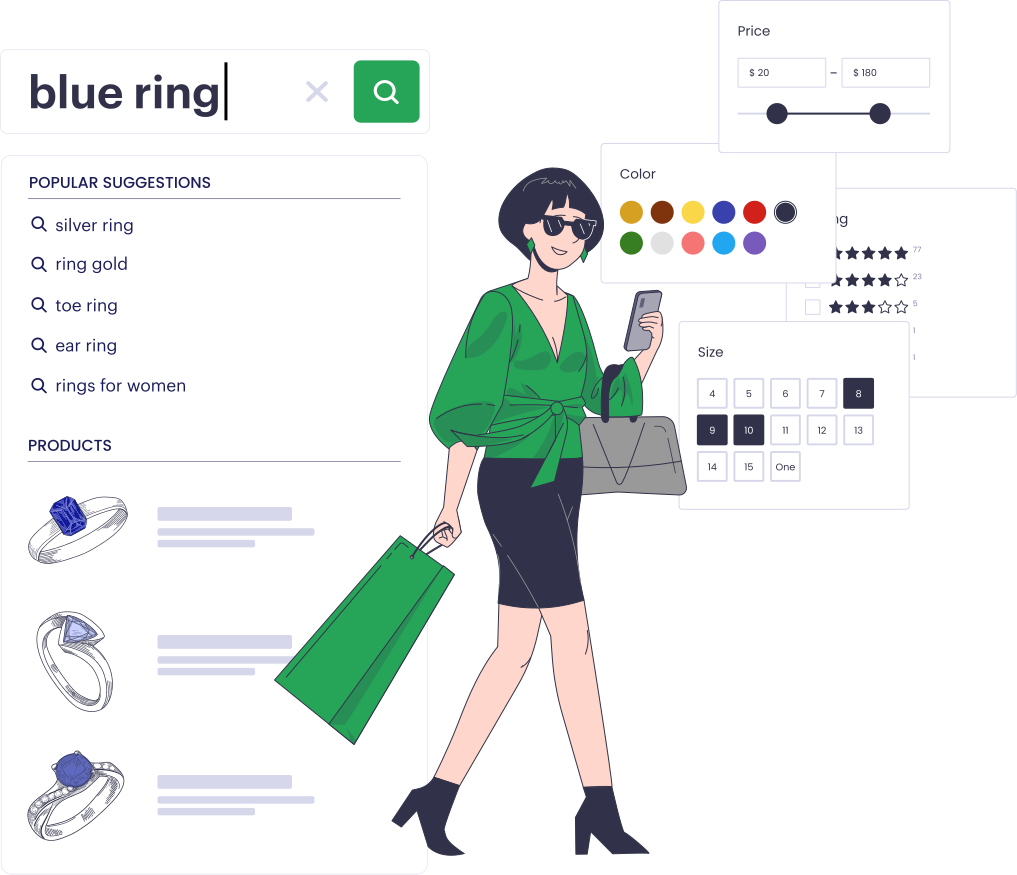
Filters are the backbone of jewelry discovery. When shoppers browse large catalogs filled with visually similar rings, necklaces, and earrings, the right faceting system turns complexity into clarity.
Jewelry shoppers don’t filter the way tech shoppers do, they filter the way they think about jewelry. That means facets must reflect real customer intent:
And it shouldn’t stop at search results. Collection pages need strong filters too.
Whether someone is browsing a “Halo Engagement Rings” collection or “Emerald Jewelry,” shoppers expect to refine products instantly — by metal, gemstone, size, or certification — without returning to the search bar. Collection-level filtering reduces friction, keeps users in the buying flow, and ensures the entire catalog feels navigable rather than overwhelming.
The best eCommerce stores use filters not just as navigation tools but as trust and confidence builders.
Jewelry shoppers don’t filter the way tech shoppers do, they filter the way they think about jewelry. That means facets must reflect real customer intent:
- Metal: gold, white gold, rose gold, platinum
- Gemstone & shape: diamond, emerald, round, pear, oval
- Style: vintage, classic, modern, halo
- Occasion: engagement, anniversary, gifting
- Budget: meaningful price checkpoints
- Carat, clarity & cut: the most decisive factors for fine jewelry
- Certifications: GIA, IGI, or AGS.
And it shouldn’t stop at search results. Collection pages need strong filters too.
Whether someone is browsing a “Halo Engagement Rings” collection or “Emerald Jewelry,” shoppers expect to refine products instantly — by metal, gemstone, size, or certification — without returning to the search bar. Collection-level filtering reduces friction, keeps users in the buying flow, and ensures the entire catalog feels navigable rather than overwhelming.
The best eCommerce stores use filters not just as navigation tools but as trust and confidence builders.

Filtration is very important in the jewelry business.
A great example is Brilliant Earth, where certification filters like GIA, IGI, or AGS appear directly in the search sidebar. When a shopper selects “GIA,” the catalog instantly narrows to stones verified by world-recognized laboratories, removing uncertainty and turning a nervous comparison process into a simple, confident decision.
This is faceting at its strongest: filters that match customer intent, reinforce authenticity, and reduce the cognitive load that often leads to hesitation or abandonment.
Takeaway: Effective jewelry filters don’t just organize products — they guide shoppers toward the right choice with clarity, certainty, and trust.
This is faceting at its strongest: filters that match customer intent, reinforce authenticity, and reduce the cognitive load that often leads to hesitation or abandonment.
Takeaway: Effective jewelry filters don’t just organize products — they guide shoppers toward the right choice with clarity, certainty, and trust.
Visual Search Integration
Jewelry is emotional and deeply visual — shoppers often know what they want the moment they see it, not when they try to describe it. That’s why visual search has become one of the most intuitive discovery tools in modern jewelry eCommerce.
With AI-powered reverse image search jewelry, customers can upload a photo, screenshot, or social media pin and instantly see similar pieces. The system analyzes key visual attributes, gemstone shape, color, metal tone, and setting style, and matches them to your catalog. It even works with model shots, helping shoppers complete the entire look.
With AI-powered reverse image search jewelry, customers can upload a photo, screenshot, or social media pin and instantly see similar pieces. The system analyzes key visual attributes, gemstone shape, color, metal tone, and setting style, and matches them to your catalog. It even works with model shots, helping shoppers complete the entire look.

Forevermark has taken jewelry image search to a new level, allowing users to easily find jewelry.
Forevermark illustrates this beautifully with its jewelry image search. A shopper can photograph a design they love or upload a screenshot, and the platform quickly reveals diamond pieces with the same visual essence. From boutique snapshots to Instagram saves, the tool recognizes shapes, tones, and settings, delivering look-alike results in seconds across both mobile and desktop.
Takeaway: Visual search transforms inspiration into action. By recognizing design cues directly from an image, jewelers meet customers exactly where their journey begins — with something beautiful they’ve seen and want to find again.
Takeaway: Visual search transforms inspiration into action. By recognizing design cues directly from an image, jewelers meet customers exactly where their journey begins — with something beautiful they’ve seen and want to find again.
Merchandising & Cross-Sell
Search isn’t just about matching queries — it’s one of the most powerful merchandising levers in a jewelry store. The right engine can surface new arrivals, highlight high-margin pieces, or elevate limited-edition collections directly inside search and category results.
Smart systems also inject subtle cross-sell opportunities. While a shopper browses rings, the search layer can suggest complementary items like jewelry boxes, cleaning kits, matching earrings, or even gift packaging. Instead of feeling like upsells, these appear as helpful additions that complete the purchase.
But merchandising isn’t only about promoting what you want to sell — it’s about promoting what customers are most likely to buy next.
This is where similar-style recommendations change the game.
Sometimes a shopper finds a ring that feels almost perfect. The halo size, metal tone, or setting shape is close, but not quite right. Instead of making them restart their search, “similar style” recommendations guide them toward refined variations of the same design.
Smart systems also inject subtle cross-sell opportunities. While a shopper browses rings, the search layer can suggest complementary items like jewelry boxes, cleaning kits, matching earrings, or even gift packaging. Instead of feeling like upsells, these appear as helpful additions that complete the purchase.
But merchandising isn’t only about promoting what you want to sell — it’s about promoting what customers are most likely to buy next.
This is where similar-style recommendations change the game.
Sometimes a shopper finds a ring that feels almost perfect. The halo size, metal tone, or setting shape is close, but not quite right. Instead of making them restart their search, “similar style” recommendations guide them toward refined variations of the same design.

What improves product discoverability? Cross-selling on product pages.
Helzberg Diamonds is a great example. Their product pages show jewelry recommendations that share the same structural attributes as the item being viewed — gemstone shape, halo architecture, prong count, setting height, and shoulder design. It feels less like browsing a catalog and more like exploring curated variations of a theme.
This subtle shift dramatically improves the shopping experience. Shoppers explore “more like this,” not “start over.” Store owners see longer engagement, smoother decision-making, and stronger product discovery without changing the catalog itself.
And sometimes you can even apply labels (“New,” “Bestseller,” “Limited Edition,” “Staff Pick”) and targeted banners inside search results — turning intent-driven pages into high-performance sales surfaces. Combined with similar-style logic, these visual cues gently guide customers toward the right variation and the right promotion at the same time.
Takeaway: Great merchandising blends creativity with precision. When you combine structured product data, visual similarity, and contextual labels or banners, search stops being a utility — it becomes a storefront that helps shoppers explore styles.
This is exactly what Upsell & Cross-Sell widgets from Searchnaise Search & Filter do for jewelry stores. A shopper opens a product page for a diamond solitaire ring and instantly sees:
This subtle shift dramatically improves the shopping experience. Shoppers explore “more like this,” not “start over.” Store owners see longer engagement, smoother decision-making, and stronger product discovery without changing the catalog itself.
And sometimes you can even apply labels (“New,” “Bestseller,” “Limited Edition,” “Staff Pick”) and targeted banners inside search results — turning intent-driven pages into high-performance sales surfaces. Combined with similar-style logic, these visual cues gently guide customers toward the right variation and the right promotion at the same time.
Takeaway: Great merchandising blends creativity with precision. When you combine structured product data, visual similarity, and contextual labels or banners, search stops being a utility — it becomes a storefront that helps shoppers explore styles.
This is exactly what Upsell & Cross-Sell widgets from Searchnaise Search & Filter do for jewelry stores. A shopper opens a product page for a diamond solitaire ring and instantly sees:

Similar Products on the product page.
Similar Products show rings with the same cut, metal, or price range. Customers Who Bought This Product Also Bought shows the matching earrings and bracelet other customers purchased together, turning a single-item visit into a complete set.
No manual pairing. The engine displays similar products based on a shared criteria.
🎥 Watch: Similar Products & Products by Attribute in Action
Jewelry shoppers often compare multiple pieces before making a decision. Product widgets help them discover similar designs, alternative materials, and complementary jewelry without interrupting their shopping journey. The result is a smoother buying experience that keeps customers exploring your catalog with confidence.
▶️ Watch the video to see how product recommendations may help you.
No manual pairing. The engine displays similar products based on a shared criteria.
🎥 Watch: Similar Products & Products by Attribute in Action
Jewelry shoppers often compare multiple pieces before making a decision. Product widgets help them discover similar designs, alternative materials, and complementary jewelry without interrupting their shopping journey. The result is a smoother buying experience that keeps customers exploring your catalog with confidence.
▶️ Watch the video to see how product recommendations may help you.


Trust UX in Search
Trust is one of the strongest conversion drivers in jewelry eCommerce. When shoppers browse rings, necklaces, or earrings, they want reassurance immediately — not after clicking through five product pages.
But trust UX isn’t only about diamonds and documentation.
It’s also about helping shoppers trust that the store understands their intent, even when that intent goes beyond jewelry itself.
But trust UX isn’t only about diamonds and documentation.
It’s also about helping shoppers trust that the store understands their intent, even when that intent goes beyond jewelry itself.

Help your customers and earn their trust.
A good example comes from JewelryDisplay Inc., where users searching for necklace gift boxes, chain boxes, or packaging get precise, structured results. For shoppers preparing a gift or a display setup, that clarity feels like trust — the system knows exactly what they mean.
Takeaway: Effective trust UX is the entire experience of feeling understood and reassured — whether someone is simply looking for the right box to present it in. When search delivers trust instantly, the buying journey becomes smoother, faster, and far more satisfying.
Takeaway: Effective trust UX is the entire experience of feeling understood and reassured — whether someone is simply looking for the right box to present it in. When search delivers trust instantly, the buying journey becomes smoother, faster, and far more satisfying.
ID-Based Search & Verification
Few products rely on trust as much as jewelry. Customers need assurance that what they’re buying is genuine, certified, and traceable.
That’s why ID-based search or jewelry serial number search is becoming a standard feature in luxury eCommerce.
Each item — from a diamond engagement ring to a platinum pendant — carries unique identifiers like:
By enabling jewelry hallmark search, jewelry trademark search, and even jewelry patent number search, you give customers instant proof of authenticity. A buyer can input a certificate number, run a quick jewelry identification, and verify a diamond’s specs in seconds.
For example, one study found that the watch & jewellery sector in Switzerland lost approximately USD 1.44 billion in 2021 due to counterfeit goods (OECD).
That’s why ID-based search or jewelry serial number search is becoming a standard feature in luxury eCommerce.
Each item — from a diamond engagement ring to a platinum pendant — carries unique identifiers like:
- SKU or serial number
- Certification ID (GIA, IGI, or AGS)
- Hallmark or trademark
- Patent or design registration
By enabling jewelry hallmark search, jewelry trademark search, and even jewelry patent number search, you give customers instant proof of authenticity. A buyer can input a certificate number, run a quick jewelry identification, and verify a diamond’s specs in seconds.
For example, one study found that the watch & jewellery sector in Switzerland lost approximately USD 1.44 billion in 2021 due to counterfeit goods (OECD).
How Leading Jewelry Stores Use Smart Search
How Leading Jewelry Stores Use Smart Search
Smart jewelry search has quietly become the competitive edge of the jewelry eCommerce world. The top global merchants aren’t just using it to improve jewelry store online search functionality — they’re using it to drive measurable business outcomes: higher engagement, better trust, and stronger lifetime value.
Here’s how the industry leaders are doing it, and what smaller brands can learn from their strategies.
Here’s how the industry leaders are doing it, and what smaller brands can learn from their strategies.
Blue Nile – Precision with Filters

Jewelry Filters - 4 Cs: cut, color, clarity, and carat.
Blue Nile was among the first fine-jewelry retailers to prove that clarity and control drive conversions.
Its jewelry search engine revolves around filter precision, focusing on the 4 Cs — cut, color, clarity, and carat — with real-time feedback on how each change affects price and appearance. The result feels transparent and empowering, not overwhelming.
This advanced faceted system also supports jewelry hallmark search and jewelry trademark search, helping shoppers quickly verify details such as certification or origin. The result feels transparent and empowering, not overwhelming. In addition, Blue Nile’s product data includes advanced attributes such as table depth, fluorescence, and symmetry, enabling precise exploration without dead ends.
Takeaway: Smart faceting isn’t about adding more filters — it’s about giving shoppers intuitive control while ensuring every result feels intentional.
Its jewelry search engine revolves around filter precision, focusing on the 4 Cs — cut, color, clarity, and carat — with real-time feedback on how each change affects price and appearance. The result feels transparent and empowering, not overwhelming.
This advanced faceted system also supports jewelry hallmark search and jewelry trademark search, helping shoppers quickly verify details such as certification or origin. The result feels transparent and empowering, not overwhelming. In addition, Blue Nile’s product data includes advanced attributes such as table depth, fluorescence, and symmetry, enabling precise exploration without dead ends.
Takeaway: Smart faceting isn’t about adding more filters — it’s about giving shoppers intuitive control while ensuring every result feels intentional.
James Allen – Visual Search & 360° Views

Significantly improve user experience with 360° views.
James Allen has built its digital identity around one promise: seeing is believing.
Its signature 360° HD product viewer lets customers search jewelry by picture, examine each diamond and setting from every angle, zooming in on inclusions, facets, and fine details. This visual transparency has become a benchmark for online jewelry presentation.
The viewer integrates seamlessly with James Allen’s search and filtering system: shoppers can search by diamond shape or ring style and instantly open high-resolution interactive previews. This combination of visual precision and intuitive discovery reduces uncertainty and builds buyer confidence — especially for high-value purchases.
Takeaway: James Allen proves that visual transparency inside search is a trust feature. When customers can explore jewelry almost as if holding it, hesitation and friction disappear.
Its signature 360° HD product viewer lets customers search jewelry by picture, examine each diamond and setting from every angle, zooming in on inclusions, facets, and fine details. This visual transparency has become a benchmark for online jewelry presentation.
The viewer integrates seamlessly with James Allen’s search and filtering system: shoppers can search by diamond shape or ring style and instantly open high-resolution interactive previews. This combination of visual precision and intuitive discovery reduces uncertainty and builds buyer confidence — especially for high-value purchases.
Takeaway: James Allen proves that visual transparency inside search is a trust feature. When customers can explore jewelry almost as if holding it, hesitation and friction disappear.
Tiffany & Co. – Branded & Certified Search

Elegance is in simplisity.
Tiffany’s digital experience reflects its brand philosophy: refined, minimal, and purposeful. Rather than overwhelming shoppers with controls, Tiffany uses a clean, intuitive jewelry search engine that surfaces collections through emotional and stylistic cues.
When users type “engagement ring” or “Tiffany Setting,” the results feel unmistakably Tiffany — elegant imagery, consistent tone, and language aligned with its heritage of craftsmanship. Each query reinforces trust by maintaining clarity, simplicity, and design precision.
Takeaway: Tiffany shows that effective search for jewelry doesn’t need to be complex to inspire trust — just consistent, elegant, and clear.
When users type “engagement ring” or “Tiffany Setting,” the results feel unmistakably Tiffany — elegant imagery, consistent tone, and language aligned with its heritage of craftsmanship. Each query reinforces trust by maintaining clarity, simplicity, and design precision.
Takeaway: Tiffany shows that effective search for jewelry doesn’t need to be complex to inspire trust — just consistent, elegant, and clear.
Cartier & Rolex – Search Built on Heritage and Authenticity

The ability to search by serial number is what builds trust.
Few luxury houses carry the authority of Cartier and Rolex — and both extend that credibility into their digital ecosystems.
Cartier’s online catalog includes jewelry trademarks search and official model references, while Rolex supports jewelry patent number search and certified records that reassure buyers. These frameworks combine heritage with technology, turning authenticity into an integral part of jewelry search and serial verification.
These frameworks turn trust into part of the search experience: customers know each product shown belongs to a verified retail network.
Takeaway: In luxury, trust begins at first glance. Cartier and Rolex show how integrating verification systems like jewelry serial number search into digital discovery builds confidence long before checkout.
Cartier’s online catalog includes jewelry trademarks search and official model references, while Rolex supports jewelry patent number search and certified records that reassure buyers. These frameworks combine heritage with technology, turning authenticity into an integral part of jewelry search and serial verification.
These frameworks turn trust into part of the search experience: customers know each product shown belongs to a verified retail network.
Takeaway: In luxury, trust begins at first glance. Cartier and Rolex show how integrating verification systems like jewelry serial number search into digital discovery builds confidence long before checkout.
Etsy – Vintage Jewelry Discovery

The ability to find a product in seconds using photo search is a real blessing.
Etsy’s greatest challenge — and advantage — is its scale: millions of one-of-a-kind jewelry listings from independent sellers.
Its jewelry image search allows shoppers to upload photos from Pinterest or Instagram and instantly discover visually similar pieces. Whether someone wants a reverse image search jewelry necklace or is trying to search jewelry by picture of a Victorian ring, Etsy’s AI analyzes design patterns, metal tones, and gemstone shapes to surface matching styles across its listings.
Takeaway: When every product is unique, image search for jewelry becomes the new language of discovery. Etsy proves that AI-powered jewelry search by photo can turn messy data into curated inspiration.
Its jewelry image search allows shoppers to upload photos from Pinterest or Instagram and instantly discover visually similar pieces. Whether someone wants a reverse image search jewelry necklace or is trying to search jewelry by picture of a Victorian ring, Etsy’s AI analyzes design patterns, metal tones, and gemstone shapes to surface matching styles across its listings.
Takeaway: When every product is unique, image search for jewelry becomes the new language of discovery. Etsy proves that AI-powered jewelry search by photo can turn messy data into curated inspiration.
Find out more about being found in AI-powered tools like ChatGPT in this article: Introducing AI Traffic Booster for Shopify. Get Discovered by AI
Google Lens – Social Media to Storefront

Another excellent example of visual search is simplifying life and increasing sales.
Google Lens has changed how shoppers discover jewelry visually. A simple phone photo of a ring or bracelet unlocks reverse image search jewelry results, showing similar styles instantly — a clear showcase of reverse image search jewelry ring technology at work.
For jewelers, this bridges social media and commerce: photos, influencer posts, and lookbooks all become searchable entry points. Optimizing for image search jewelry ensures every photo doubles as a discovery tool.
Takeaway: Reverse image search jewelry is reshaping how jewelry is found. Every product photo you upload isn’t just marketing — it’s a potential search query.
For jewelers, this bridges social media and commerce: photos, influencer posts, and lookbooks all become searchable entry points. Optimizing for image search jewelry ensures every photo doubles as a discovery tool.
Takeaway: Reverse image search jewelry is reshaping how jewelry is found. Every product photo you upload isn’t just marketing — it’s a potential search query.
Why Searchanise is the Right Choice for Jewelry Stores
Why Searchanise is the Right Choice for Jewelry Stores
Jewelry stores face unique discovery challenges — complex catalogs, similar-looking items, and customers who often search emotionally rather than technically. Traditional on-site search engines can’t keep up: they rely on exact keywords, slow filtering, and offer little insight into what shoppers really want.
Searchanise Search & Filter was built to optimize your website's search function effortlessly. The app that implements smart search and product filters to your online store, boosts conversion rate, and improves UX.
Searchanise Search & Filter was built to optimize your website's search function effortlessly. The app that implements smart search and product filters to your online store, boosts conversion rate, and improves UX.
Smarter Search That Understands Jewelry Terminology

Use synonyms to help users find what they are looking for more quickly.
Most jewelry customers use natural language, not exact product wording. Searchanise bridges that gap by correcting typos and mapping synonyms automatically. Type “rose gold engagement ring,” and it still finds items labeled “pink gold” or “RG band.” In the end, shoppers discover what they meant to search for.
💡 Autocomplete, autocorrect, and synonym mapping make every query feel effortless — perfect for shoppers describing complex jewelry pieces in everyday words.
💡 Autocomplete, autocorrect, and synonym mapping make every query feel effortless — perfect for shoppers describing complex jewelry pieces in everyday words.
Fully Customizable Filters That Convert

Create and customize filters according to your needs.
Every jewelry store is unique — and so are its filters. With Searchanise, you can create filters for any product attribute:
Filters are generated automatically from product data and can be fine-tuned right in the app — no developer needed.
Advanced multi-select filters let shoppers explore combinations (like white gold + sapphire + under $1000), dramatically improving search precision and conversion.
- Gemstone type and color
- Metal (gold, platinum, silver, titanium)
- Carat weight or size
- Certification (GIA, IGI, AGS)
- Collection or designer
Filters are generated automatically from product data and can be fine-tuned right in the app — no developer needed.
Advanced multi-select filters let shoppers explore combinations (like white gold + sapphire + under $1000), dramatically improving search precision and conversion.
Instant Search Results with Visual Previews

The Instant Search widget makes life easier for your customers.
Jewelry is emotional and visual — shoppers want to see before they click. Searchanise delivers real-time results with product images, titles, prices, and labels directly inside the Instant Search widget.
As users type, relevant products appear immediately, complete with visual cues like “New,” “Bestseller,” “Certified,” or “Limited Edition.” These micro-signals keep shoppers engaged and reduce drop-offs during the discovery stage.
And for shoppers ready to buy, Searchanise includes an “Add to Cart” button directly inside the Instant Search Widget, letting customers add items instantly — without loading a product page. This shortens the buying path, boosts conversions on mobile, and turns search itself into a high-performing sales surface.
As users type, relevant products appear immediately, complete with visual cues like “New,” “Bestseller,” “Certified,” or “Limited Edition.” These micro-signals keep shoppers engaged and reduce drop-offs during the discovery stage.
And for shoppers ready to buy, Searchanise includes an “Add to Cart” button directly inside the Instant Search Widget, letting customers add items instantly — without loading a product page. This shortens the buying path, boosts conversions on mobile, and turns search itself into a high-performing sales surface.
Built-In Merchandising and Promotions

Promote your priority items.
Search shouldn’t just respond — it should inspire. With Searchanise, merchants can highlight featured jewelry collections, seasonal campaigns, or exclusive drops directly inside search results.
You can boost visibility for priority items using product labels such as “New,” “Bestseller,” “Limited Edition,” “Back in Stock,” or “Certified.” These labels appear instantly within search results and guide shoppers toward high-impact products without adding friction.
You can even add promotional banners right inside Instant Search widget — great for Valentine’s Day, holiday events, flash sales, or new collection highlights. And with pinning and merchandising rules, your most important products can be placed at the top of results whenever you need them to shine.
💡 Merchandising inside the search experience turns discovery into conversion — leading shoppers toward what’s trending, what’s new, or what drives your best ROI, all before they even reach a product page.
You can boost visibility for priority items using product labels such as “New,” “Bestseller,” “Limited Edition,” “Back in Stock,” or “Certified.” These labels appear instantly within search results and guide shoppers toward high-impact products without adding friction.
You can even add promotional banners right inside Instant Search widget — great for Valentine’s Day, holiday events, flash sales, or new collection highlights. And with pinning and merchandising rules, your most important products can be placed at the top of results whenever you need them to shine.
💡 Merchandising inside the search experience turns discovery into conversion — leading shoppers toward what’s trending, what’s new, or what drives your best ROI, all before they even reach a product page.
Analytics That Reveal Buyer Intent

See how well the search function works in your store.
Most search tools stop once results appear. Searchanise keeps going. Its built-in Search Analytics Dashboard shows:
This data helps you understand what shoppers are actually looking for — whether it’s “halo settings” or “sustainable diamond rings.”
Armed with that insight, you can refine listings, create better filters, and optimize product copy for higher engagement.
- Top-performing queries and products
- Zero-result searches (so you can fix gaps fast)
- Filter value combinations
- And more!
This data helps you understand what shoppers are actually looking for — whether it’s “halo settings” or “sustainable diamond rings.”
Armed with that insight, you can refine listings, create better filters, and optimize product copy for higher engagement.
Optimized for Mobile and Global Shoppers

Optimization for mobile devices is crucial in the age of mobile technology.
A growing share of jewelry discovery now happens on mobile — and Searchanise is built for it. The responsive search bar, sticky filters, and fast indexing keep the experience smooth across all devices. And with built-in voice search, shoppers can simply speak their query (“rose gold pendant,” “emerald halo ring”) and get instant, accurate results without typing.
For international stores, multi-language support ensures that “bague en diamant”, “anillo de compromiso”, and “diamond ring” all lead to the same beautiful products. Synonyms, translations, and localized indexing make global search feel natural, consistent, and frictionless. Whether it’s an iPhone shopper in New York or a tablet user in Paris, your search experience feels seamless, localized, and immediate — no matter how they choose to search.
For international stores, multi-language support ensures that “bague en diamant”, “anillo de compromiso”, and “diamond ring” all lead to the same beautiful products. Synonyms, translations, and localized indexing make global search feel natural, consistent, and frictionless. Whether it’s an iPhone shopper in New York or a tablet user in Paris, your search experience feels seamless, localized, and immediate — no matter how they choose to search.
Find more insights about a mobile-friendle approach to sales in our recent blog post: Every Tap Counts: Optimizing Shopify Mobile UX for Maximum Impact.
Fast Setup, Instant Results
You don’t need a development team or long integration cycles. Searchanise installs in minutes, automatically indexes your entire catalog, and starts delivering optimized search results right away. It scales easily as your jewelry collections grow — from a few hundred to tens of thousands of products.
Conclusion
Conclusion
Great jewelry search functionality is the foundation of trust and sales in jewelry eCommerce.
When shoppers can filter by certification, use reverse image search jewelry necklace tools to identify designs, or instantly search for jewelry accessories, your store feels less like a catalog and more like a curated boutique.
Searchanise Search & Filter makes that effortless. With AI-powered discovery, dynamic filters, and visual recognition, it transforms every visit into a confident purchase.
Install Searchanise today — and let your jewelry store sell with brilliance.
When shoppers can filter by certification, use reverse image search jewelry necklace tools to identify designs, or instantly search for jewelry accessories, your store feels less like a catalog and more like a curated boutique.
Searchanise Search & Filter makes that effortless. With AI-powered discovery, dynamic filters, and visual recognition, it transforms every visit into a confident purchase.
Install Searchanise today — and let your jewelry store sell with brilliance.
James
James is a dedicated writer with a deep passion for business growth, eCommerce, and the latest innovations in technology. With a keen eye for emerging trends, he focuses on creating content that helps businesses navigate and thrive in the digital landscape. When he's not writing insightful articles, James enjoys delving into the world of AI tools.

Questions left?
We'll be happy to answer them!
We'll be happy to answer them!
Let's stay in touch!
Subscribe to our newsletters to learn more about Searchanise lifehacks, useful articles, and latests news.
We care about the protection of your data. Read our Privacy policy